
Speakers
Plenary Speakers

Dr. Leonardus Vergütz
Chief Scientific Officer of OCP Nutricrops
Presentation title: What Temperate Agriculture Doesn’t Teach Us: The Critical Role of Variable Charge Soils in the Tropics
As Chief Scientific Officer of OCP Nutricrops, a global innovator in soil and plant health solutions, Dr. Vergütz combines 12 years of academic research, 3 years of executive leadership, and hands-on farming experience to redefine sustainable agriculture.
A scientist, strategist, and startup founder, he bridges the gap between cutting-edge research and practical farming solutions. His mission: empowering farmers worldwide with science-driven tools to improve soil health, enhance productivity, and turn agriculture into a frontline solution for climate change.
By integrating long-term research, business innovation, and farmer-centric insights, he transforms scientific breakthroughs into scalable impact—proving that productive agriculture and environmental stewardship can thrive together.

Professor Steven Ratuva
Pro-Vice Chancellor Pacific and Director of the Macmillan Brown Centre for Pacific Studies at the University of Canterbury
Presentation title: Soil, strategic adaptation, and SDGs: The science-humanity interface.
Born in Fiji, Distinguished Professor Steven Ratuva is Pro-Vice Chancellor Pacific and Director of the Macmillan Brown Centre for Pacific Studies at the University of Canterbury. He is also Foundation Chair of the International Political Science Association (IPSA) Research Committee on Climate Security and Planetary Politics and former President of the Pacific Islands Political Science Association. He also Chairs the annual International Conference on Social Science and an expert project assessor for the International Science Council. He was appointed by the UN Secretary-General to be part of an expert team to write the 2027 Global Sustainable Development Report (GSDR). He has led a number of international research teams on global security, COVID, climate security and resilience. He is a member of a number of advisory committees and boards including Commissioner for the NZ Climate Change Commission and a Council member of the NZ Royal Society. He is interdisciplinary scholar across various fields such as political sociology, development studies, climate adaptation, social anthropology and social history and he has worked in a number of international universities including as Fulbright fellow at UCLA, Duke and Georgetown. He has won various awards including the national Metge Medal for excellence in social science research in NZ and the University of Canterbury Research Medal and the University Sustainability Research Award. He has been advisor and consultant for UNDP, World Bank, International Labour Organizations, Pacific Islands Forum, Commonwealth Secretariat, Asian Development Bank and other international organisations.

Dr Siosiua Halavatau
Chair of Pacific Soil Partnership (PSP)
Presentation title: Food Production Systems in the Pacific Islands: Are interconnectedness of Land including soil, water, and culture.
Siosiua Halavatau received BSC Agriculture Hons from Punjab Agriculture University, MSc in Soils from USP, Samoa, and his PhD in Soil Science in 1998 through The University of Queensland and was employed by the Secretariat of the Pacific Community (SPC) as a Team Leader and Participatory Extension Officer within the regional project Development of Sustainable Agriculture in the Pacific (DSAP) until January 2011. He then from 2011 to 2018 became the coordinator of the Crop Production and Extension Thematic Group of the Land Resource Division of SPC. He also coordinated the IFAD funded Centre of Excellence for Atoll Agricultural Research and Development based in South Tarawa in Kiribati. Major thrust was building resilience of farming systems against climate change and food security. He was lead scientist for the two ACIAR Soil Health projects in the region on high islands and on atolls.
Siosiua from 2015, for 7 years represented the Pacific Islands to the FAO GSP Intergovernmental Panel for Soils (ITPS) and is the current chair of PSP.
He was the Minister of Agriculture, Food, and Forests for Tonga in 2025.
He is currently an independent consultant in soil science, development of strategic plans, monitoring and evaluation plans, and indicator tracking tools.
Keynote Speakers

Professor Paul Nelson
Professor, James Cook University
Keynote title: Nutrient interactions in variable-charge soils: implications for plant productivity and atmospheric CO2
Professor Paul Nelson is a soil scientist helping to improve agricultural land management and has 35 years of experience working at the agricultural-environmental interface. He has studied soil condition, functions and the effects of agricultural management in Australia, Europe, Asia and the Pacific. Over the past 27 years he has worked in the tropics, with soils ranging from recent volcanic ash in Papua New Guinea to highly weathered soils in northern Australia. His major research interests include soil carbon cycling, and the effects of enhanced rock weathering on carbon dioxide capture. He has worked at the University of Adelaide, the French national agricultural research agency (INRA), the Bureau of Sugar Experiment Stations, CSIRO, the Papua New Guinea Oil Palm Research Association, and the Queensland Department of Natural Resources. Paul is now a research leader at James Cook University in Cairns, Australia.

Professor Renkou Xu
Research Professor, Chinese Academy of Sciences
Keynote title: Interaction between oppositely charged particles and its effect on surface chemical properties of variable charge soils
Renkou Xu is a Research Professor at Institute of Soil Science, Chinese Academy of Sciences, as well as a professor at University of Chinese Academy of Sciences. He received his Ph. D in Soil Science in 1997 from Institute of Soil Science, Chinese Academy of Sciences and was appointed as Professor at the same institute in 2004. He is currently Editor-in-Chief of the journal Acta Pedologica Sinica and Associate Editor of the Journal of the Science of Food and Agriculture. He is also a member of the Biochar editorial board. Dr. Xu has been working on the surface chemical properties of variable charge soils, soil acidification mechanisms, and the amelioration of acid soils for a long time. He has had more than 230 articles published in international journals, as well two books in Chinese. He received the National Award for Science and Technology Progress from the Chinese Government in 2018. He was awarded the honorary title of Young and Middle-Aged Expert with Outstanding Contributions in Jiangsu Province, China in 2020.

Professor Lúcia Anjos
Prof. Ph.D., Federal Rural University of Rio de Janeiro (UFRRJ)
Keynote title: Understanding Brazilian soils with variable charge: history and development of sustainable technologies to ensure food productivity
Ph.D and Pos-doctorate in Agronomy – Soil Science from Purdue University (USA). Expertise in Soil Genesis, Morphology and Classification. Member of IUSS Working Group to develop the World Reference Base for Soil Resources (WRB). Organizing committee of 21st World Congress of Soil Science, August 2018. President of Brazilian Soil Science Society (SBCS) from 2019 to 2023. Member of the National Executive Committee of PronaSolos (MAPA-Embrapa Soils) from 2020 to 2021. Member of the Brazilian Academy of Agronomic Science (ABCA). Expert member of the Intergovernmental Technical Panel on Soils (ITPS) – FAO/ Global Soil Partnership (GSP), from 2018 to 2025, representing Latin America and Caribbean. Lead of the working group of ITPS and International Network of Black Soils (INBS) that elaborated the Global Status of Black Soils report, 2020 to 2022. Member of the Working Group for preparation of the FAO/ITPS document Status of the Worlds Soil Resources Report 2025.

Professor Budiman Minasny
University of Sydney
Keynote title: Carbon sequestration potential in variable charge soils
Budiman Minasny is a Professor of Soil-Landscape Modelling at the University of Sydney and a Fellow of the Australian Academy of Science. A recipient of the prestigious Australian Research Council Future Fellowship, he is internationally recognised as a leading soil scientist. Since 2019, he has been named a Highly Cited Researcher by the Web of Science.
His research focuses on the critical role of soil in addressing global challenges such as climate change, food and water security, sustainable energy, and biodiversity conservation. With over 160 peer-reviewed publications, he is widely acknowledged as a pioneer in digital soil mapping and modelling.

Prof Pandi Zdruli
Senior Research Scientist with the International Centre for Advanced Mediterranean Agronomic Studies (CIHEAM) Mediterranean Agronomic Institute of Bari
Keynote title: A European perspective of Sustainable Soil Management when dealing with variable charge soils.
Prof. Dr. Pandi Zdruli is Senior Research Scientist with the International Centre for Advanced Mediterranean Agronomic Studies (CIHEAM) Mediterranean Agronomic Institute of Bari in Italy since 1999 where he teaches soil science. Prior to this, he was Visiting Scientist with the European Commission’s Joint Research Centre at Ispra, Italy and Senior Fulbright Research Scholar at the USDA – Natural Resources Conservation Service in Washington, D.C. He graduated in 1981 from the Agricultural University of Tirana in his native Albania and after working for 13 years in his home country he pursued graduate studies in the USA sponsored by the Fulbright Foundation.
Prof. Zdruli has published more than 80 papers on soil management topics and has edited 12 books. Among others, he is member of International Union of Soil Science, Soil, Crop and Agronomy Society of America, Italian Society of Soil Science, European Soil Partnership, European Society for Soil Conservation, Fulbright Association, editorial board member of the Soil Atlas of Europe and Asia, major contributor of the World Atlas of Desertification (3rd edition), Coordinating Lead Author of the chapter Land and Soil of the Global Environment Outlook 7th Assessment (GEO-7), board member of the EU’s mission Soil Deal for Europe and many other prestigious boards.
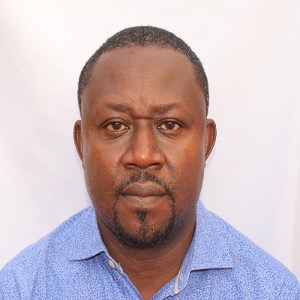
Dr. Ndzana Georges Martia
Senior Lecturer at the University of Dschang in Cameroon
Keynote title: Chemistry and Mineralogy of Variable Charge Soils: Foundations for Sustainable Land Use and Environmental Stewardship
Dr. Ndzana Georges Martial holds a PhD in Soil Chemistry and Clay Mineralogy from Huazhong Agricultural University, China, with a research focus spanning macro- to nanoparticle-scale processes in soil systems. He completed postdoctoral research at the Chinese Academy of Agricultural Sciences (CAAS) in Beijing and the University of Münster in Germany, where he investigated interactions between soil minerals and soil organic carbon. Currently, Dr. Martial is a Senior Lecturer at the University of Dschang in Cameroon, where he is actively involved in teaching, research, and graduate student supervision. His broader scientific contributions include serving as a grant reviewer for multiple funding agencies.Ndzana chairs the International Network on Soil Fertility and Fertilizer (INSOLFER) under the FAO’s Global Soil Partnership (GSP) and serves as an expert member of the Intergovernmental Technical Panel on Soils (ITPS), representing the African region. He is also the African regional lead author for the forthcoming UN-FAO World Soil Resources Report 2025. Since 2018, he has been an active member of Commission 3.5: Soil Degradation, Control, Remediation and Reclamation of the International Union of Soil Sciences (IUSS).

Prof. Dr. Rashidi Othman
Professor, certified professional technologist, and horticulturist at the Department of Landscape Architecture, International Islamic University Malaysia
Keynote title: Key Indicator Tools For Early Warning Shallow Slope Failure Using Soil Chemical Properties Signatures And Soil Chromaticity
Dr. Rashidi Othman is a Professor, certified professional technologist, and horticulturist at the Department of Landscape Architecture, International Islamic University Malaysia, specializing in plant, soil, and ecology. He received his Ph.D. from Lincoln University, New Zealand. With over 25 years of research and teaching experience, Prof. Ts. Dr. Rashidi Othman achievements including 182 research journal publications, 165 proceeding papers, 25 published books, 60 book chapters, 12 international awards, 6 patents, 2 utility innovations, and 3 copyrights. Till now, the research is funded by more than 30 research grants.
Dr. Rashidi’s research focuses on problem soils and forest ecosystem in Malaysia, as well as plant biotechnology. His research findings represent a major step forward in the manipulation of aesthetic and functional values of natural resources to be integrated and incorporated into the built environment. This work also provides a new dimension or insights into the conservation and preservation of endangered ecosystems through landscape ecological approaches.
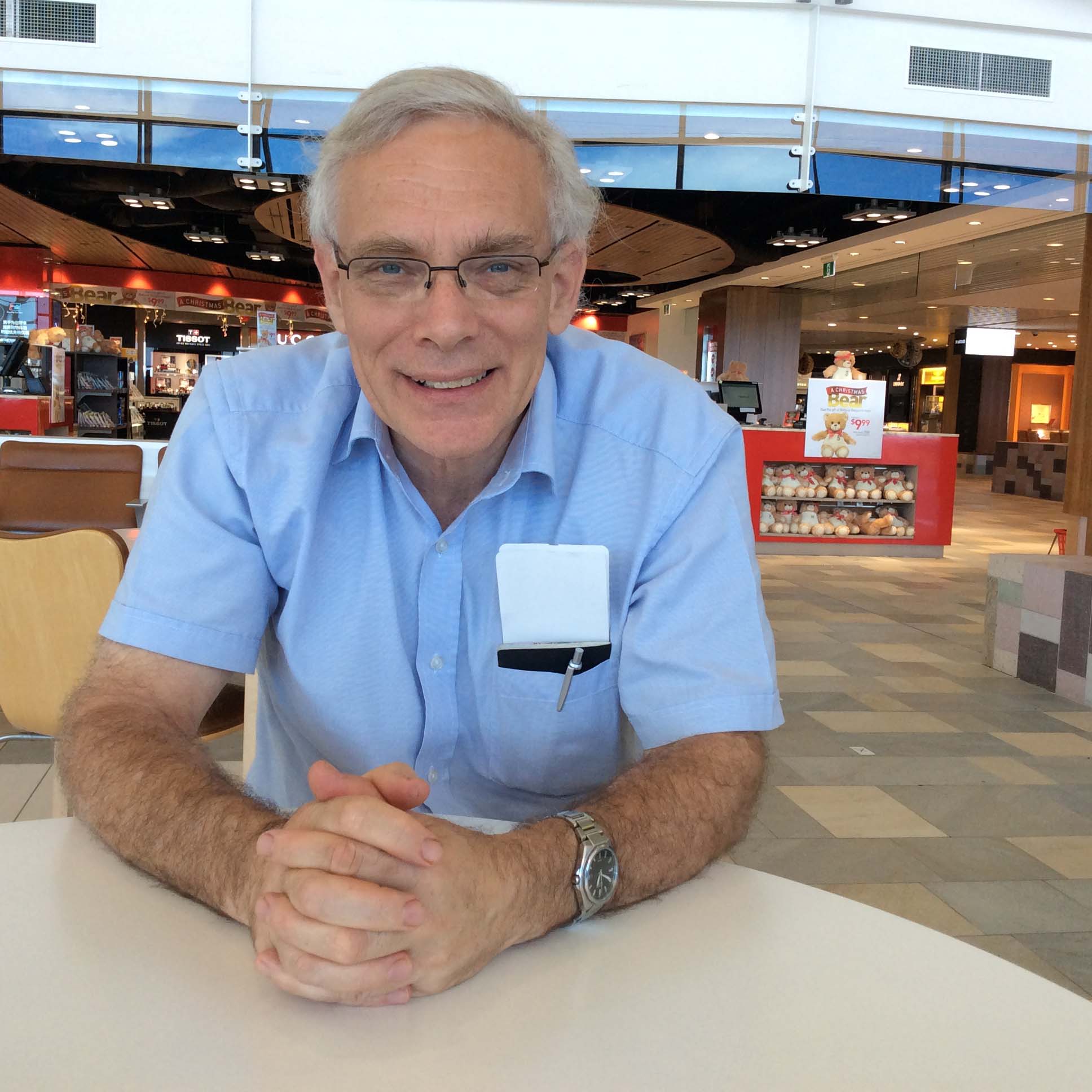
Prof. Richard Haynes
Professor at the School of Agriculture and Food Sustainability, Faculty of Science, University of Queensland
Keynote title: Synergistic Nutrient Dynamics and Agronomic Strategies in Variable Charge Soils
Professor Richard Haynes is an applied soil scientist with over 40 years experience working on soil fertility, soil quality and soil pollution in both the Research Institute and University environments. He has worked on soil acidity, phosphorus and silicon availability, nitrogen turnover, soil biology and soil pollution in variable charge soils in New Zealand, South Africa and Australia. He has worked on soil fertility in both the extensive farming systems and also in small scale semi-subsistence agriculture in South Africa. His main interest is in integrating soil chemistry, soil physics and soil microbiology/biology knowledge to develop sustainable soil management strategies for sustainable farming systems. He is the author of over 200 research and review publications and has been keynote speaker at many international conferences.

Tanner Beckstrom
Department of Natural Resources and Environmental Management, University of Hawaiʻi at Mānoa
Keynote title: Minerals and Management: Novel Insights into Variable Charge Soil Organic Matter Fractions Across Pacific Island Landscapes
Tanner Beckstrom is in the Department of Natural Resources and Environmental Management at the University of Hawaiʻi at Mānoa, specializing in soil ecology and health assessment in variable charge soils of (sub)tropical volcanic islands. His dissertation research integrates mid-infrared spectroscopy, machine learning, and soil organic matter fractionation to advance quantitative approaches to soil health monitoring. His current work investigates landscape-level trends in soil size and density fractions across diverse volcanic soil types and land uses to elucidate how land management and soil mineralogy interact to shape fraction characteristics. Collectively, his work seeks to improve mechanistic understanding and monitoring of organic matter persistence in variable charge soils to support sustainable land management in (sub)tropical and volcanic environments.

Distinguished Laureate Professor Ravi Naidu
Founding Director of the University of Newcastle’s Global Centre for Environmental Remediation (GCER) and CEO and Managing Director of the Cooperative Research Centre for Contamination Assessment and Remediation of the Environment (crcCARE)
Keynote title: Navigating Chemical Fate in Variable Charge Soils: Interactions, Mobility, and Risk Management in a Changing Environment
Laureate Professor Ravi Naidu is the Founding Director of the University of Newcastle’s Global Centre for Environmental Remediation (GCER) and CEO and Managing Director of the Cooperative Research Centre for Contamination Assessment and Remediation of the Environment (crcCARE).
Professor Naidu is internationally renowned for his pioneering work in developing improved methods to assess, characterise risk, and remediate contaminated soil, water, and air, with a focus on the impacts of environmental contaminants on human and ecological health.
He is recognised as the most highly cited environmental scientist in Australia and ranks among the top 1% of environmental scientists globally, according to Clarivate. In addition, GlobalResearch.com recently ranked him as the number one environmental scientist in Australia and among the top 60 worldwide.
In 2023, Professor Naidu was awarded the World Soil Prize, the highest global honour in soil science, in recognition of his exceptional contributions to advancing soil science and sustainable environmental practices. He was also honoured with the Kabata-Pendias Medal by the European Geosciences Union, which recognises scientists with outstanding international standing in Soil System Sciences.
Professor Naidu was recently appointed Chair of the United Nations Food and Agriculture Organization (FAO)’s International Network on Soil Pollution (INSOP). This global network was established by the FAO to intensify efforts in preventing soil contamination caused by chemicals, fertilisers, plastics, and other pollutants. Under his leadership, INSOP brings together global experts to address the full cycle of soil pollution—from assessment to remediation and its link to the food chain—with the goal of achieving zero pollution and safeguarding both environmental and human health.
Over his distinguished career, Professor Naidu has also received numerous accolades. In 2013, he was awarded an Honorary Doctor of Science from Tamil Nadu Agricultural University for his “outstanding contributions to agriculture,” and received the Richard Pratt – Banksia CEO Award at the Banksia Sustainability Awards for his work in environmental sustainability. In 2022, he received the Mahatma Gandhi Leadership Award and Medal for his contributions to environmental sustainability, presented at the House of Commons, London, on 30 September.

Dr Rashidul Islam
University of Newcastle
Keynote title: Analytical Techniques and Challenges in Soil Charge Characterisation
Dr Rashidul Islam is an environmental chemist with a strong focus on applied soil–mineral chemistry and environmental sustainability. He holds a PhD in Environmental Remediation from the University of Newcastle, Australia, and has extensive experience in analysing soil–mineral systems relevant to pollutants management, agriculture, mining, and climate mitigation. His expertise includes surface physicochemical characterisation of soils and clay minerals, soil-mineral system, clay–organic interactions, and pH-dependent charge behaviour. His work aims to bridge fundamental soil chemistry with real-world environmental and agricultural applications, particularly in the context of sustainable soil management and climate-relevant challenges.

Scott D Warner
Principal Hydrogeologist, BBJ Group, San Rafael, California, USA
Keynote title: Dynamic aqueous redox – Monitoring methods and implications for variable charge soils
Scott D. Warner is consulting hydrogeologist and remediation practitioner with nearly 40 years of experience in designing and implementing innovative soil and groundwater clean-up measures. His work includes being a lead designer for the first full-scale permeable reactive barrier for in situ groundwater remediation – a system that has sustainably mitigated groundwater contaminants for more than 30 years. His work has involved environmental sites on six continents, and he has delivered numerous presentations and training courses on environmental remediation in numerous geographies for private, government and academic audiences. Scott’s research focus is on developing methods to treat groundwater contaminants passively under the threat of climate change. In addition to his affiliation with the University of Newcastle, Scott has a MS in Geology from Indiana University, Bloomington (USA) and a BS in Engineering Geology from the University of California, Los Angeles (USA) and is a certified Professional Geologist, Hydrogeologist and Engineering Geologist in the USA.